
The current Deloitte partner for governance, regulation and conduct has joined the university’s ethics unit team, Deakin said in a statement.
Dr Sanders will hold a webinar on 6 June as well as deliver a four-day intensive version of Deakin’s ethics subject at the end of the year.
Deakin University associate professor Adrian Raftery said Dr Sanders is renowned as the one of the leading experts around ethics and professionalism and is delighted to have him join the ethics unit team.
“This is an honorary role so we are obviously ecstatic that someone of Deen’s calibre wants to come to Deakin and offer his services voluntarily,” Mr Raftery said.
“Feedback from advisers is that they want the opportunity to have at least part of their course delivered face-to-face, rather than all online, but they simply can’t commit to attending class every week.”
In preparation for the first FASEA exams, Deakin University said it is offering a number of free webinars, complimentary mapping and recognition of prior learning services, and innovative courses built by some of the nation’s leading financial planning academics.
It has also reconfigured its suite of postgraduate offerings, ranging from individual bridging courses in ethics, financial services regulation and behavioural finance through to a graduate certificate of financial planning, specifically tailored to advisers with relevant degrees needing to complete four units of study.
“There is a bit of nervousness amongst the financial advice fraternity as the reality of a new era of professionalism sets in, so we’re working hard to take some of that stress away,” Mr Raftery said.
“Deakin has provided financial planning education for more than three decades, so we are placed well to help advisers navigate through these new professional, ethical and education standards.”
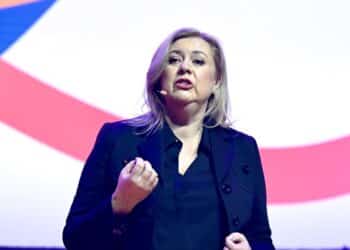




During the Deakin webinar a question was put to Sanders about why FASEA was forcing everyone to do an ethics bridging course while refusing to recognise any prior ethics training.
Sanders’ response was he didn’t know because he’d been gone from FASEA for too long. But he thought that everyone should be studying lots of ethics on an ongoing basis anyway so it doesn’t really matter. What an absolute cop out! The FASEA ethics bridging course will be time consuming and expensive, at a time when many advisers are struggling with a tsunami of other regulatory issues. But worse than that, it will be a gun to advisers’ heads that will end their careers if they don’t complete it. The amount of material required for the bridging course will be much more than just learning the specific FASEA code. It will include swathes of general theory that many advisers have already studied before.
If the former head of FASEA can’t provide a reasonable answer to the question, it makes you wonder what’s really going on. Hopefully the new minister with responsibility for FASEA is also asking questions.
To those who say there is no conflict for Mr Sanders because it is an ‘honorary’ position (not paid).
While not paid, the title itself ‘honorary’ infers a value that is, to be admired or respected.
Now I don’t know Mr Sander’s financial position. But if an individual were of good financial standing, and with a strong education / network, would it not make sense to seek ‘honorary’ positions?
That is, positions that ‘enhance’ one’s standing and influence? Is this not a conflict of interest’? Is a conflict of interest only monetary?
And by conflict of interest, I mean it in the sense that:
(i) vertical integration continues to be allowed (the key source of conflict of interest), and,
(ii) while advice is needed more than ever, the cost is skyrocketing and the number of advisers will significantly decline.
Meanwhile we have parties to lecture us on codes of ethics and exams, who will enhance their own standing from the new arrangements.
Now let us see, FASEA’s Code of Ethics are quite [b]absolute [/b][b][/b] in their wording:
Standard 2: “You must act with INTEGRITY and in the BEST INTERESTS of each of your clients”
Standard 3: “You MUST NOT advise, refer or act in any other manner where you have a CONFLICT OF INTEREST or duty”
Standard 6: “You must take into account the BROAD EFFECTS arising from the client acting on your advice and actively consider the clients broader, LONG-TERM interests and likely circumstances”.
Standard 12: “Individually and in cooperation with peers, you MUST UPHOLD and promote the ethical standards of the profession, and hold each other ACCOUNTABLE for the protection of the PUBLIC INTEREST”
[b]Let’s be clear – since vertical integration continues to be allowed – everything else is MANAGING conflict of interest. The rest is [u]sophistry[/u][u][/u] – and in this I include the new Code of Ethics, and the outcomes from the Royal Commission. [/b][b][/b]
[quote=Anonymous]leave FPA , move on to the FAEA board after the FPA nominated and put him in , kicked out , now to a Desperate institution deakin that is paid by the taxpayers of australia to sit next to another failure mr Rafferty that has moved on elsewhere ? The revolving door and back slapping continues !!!! [/quote][quote=Anonymous]leave FPA , move on to the FAEA board after the FPA nominated and put him in , kicked out , now to a Desperate institution deakin that is paid by the taxpayers of australia to sit next to another failure mr Rafferty that has moved on elsewhere ? The revolving door and back slapping continues !!!! [/quote]
how did this hostile prejudicial comment get published.
Dr Rafferty is a Royal Chartered Accountant.
are you a royal anything ?
his esteemed association has two royal charters. What about your association do they have any special royal charters proclaiming and affirming for all humanity to see plainly your esteemed, royal, and privileged pedigree in life and in your profession?
leave FPA , move on to the FAEA board after the FPA nominated and put him in , kicked out , now to a Desperate institution deakin that is paid by the taxpayers of australia to sit next to another failure mr Rafferty that has moved on elsewhere ? The revolving door and back slapping continues !!!!
So he left FASEA so he could concentrate on developing tools to support advisers. Seems the only tool he’s developing is himself :-O
I want to see Deen take the FASEA exam live on webcam so we can all see the results. And all FASEA Board members for that matter. Then they can preach to me about Ethics and the need for further education.
Now I’ve seen it all….and they call advisers conflicted! Spare me!
Honorary role or not, this absolutely stinks of conflicted remuneration. I have no doubt whatsoever that something’s completely wrong with this.
Deen’s appointment is indeed an Honorary one as you will note in one of the quotes attributed to me – so for those who are attempting to take a swipe about his integrity re: conflicted remuneration, etc etc I hope you have the decency to withdraw your comments. Obviously I am biased but I am delighted that we can draw on Deen’s expertise rather than have it lost totally to the profession.
WAYNE… you stated “If anything is conflicted remuneration this activity is it.”
i think you are incorrect in this as the role is an honorary role therefore nil payment, if nil payment nil conflict
This is self evidently a conflicted arrangement/appointment
Cannot wait to be preached at by “Dr” Saunders again about ethics and conflicts of interest. Obviously the rules he will be teaching don’t apply to him.
Talk about conflicting. Perhaps an ethics exam would be appropriate!!
I think this is great. Finally somebody who can validly say i know what should be in the ethics module and fill the void left by FASEA not being responsive on this material component.
All we need now is a clear mandate that FASEA will respect and approve the outcome.
Jobs for the boys.
This behaviour should be not be permitted. He is compromised.
If anything is conflicted remuneration this activity is it.
If he was an ethical individual he would had have declined the role due to his previous role.